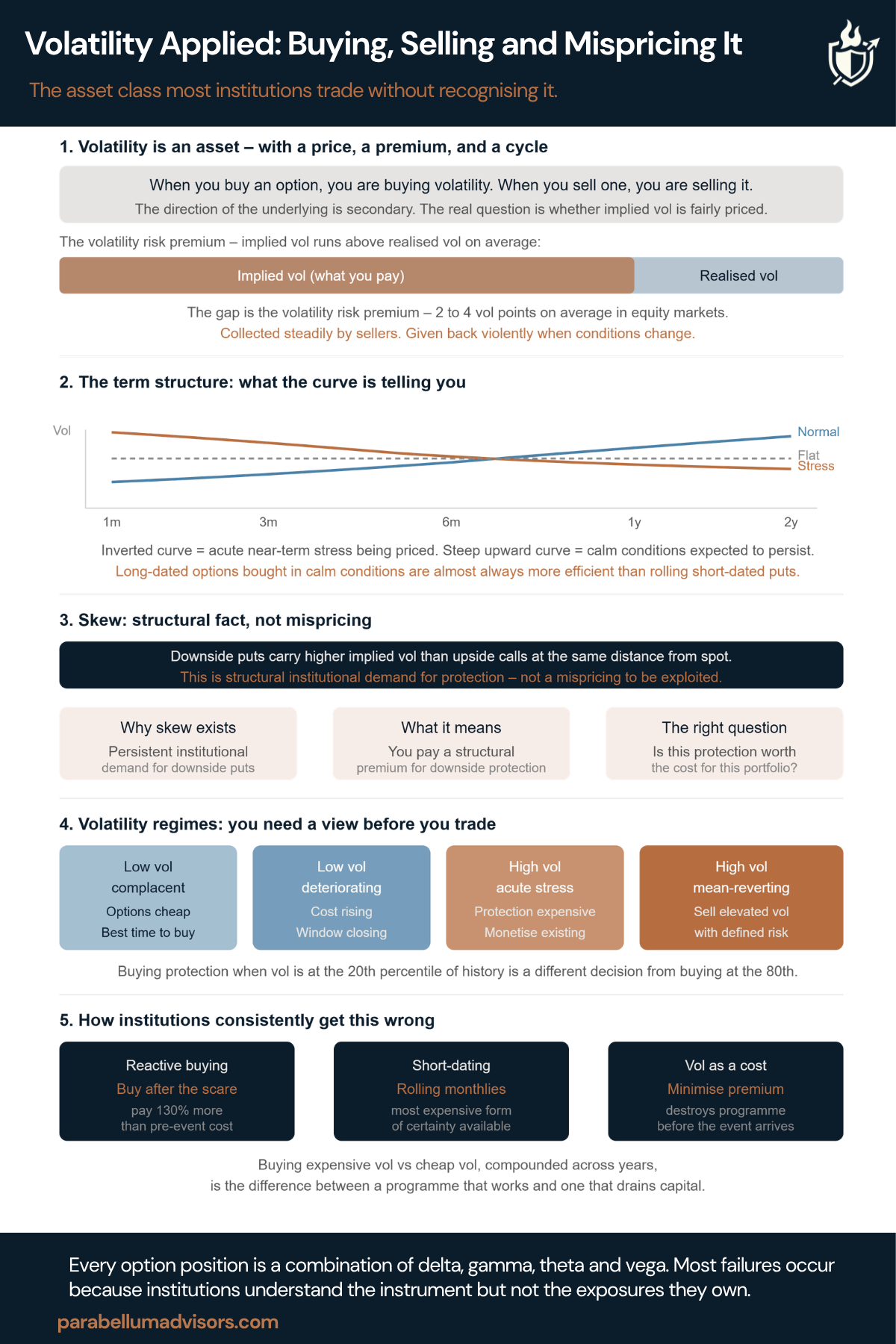
Volatility. The asset class most institutions trade without recognising it.
Volatility is not just a risk metric. It is an asset with its own supply and demand, term structure and pricing cycles.
When you buy an option, you buy volatility. When you sell one, you sell it. The direction of the underlying is only part of the story. The more important question is whether the volatility embedded in the option price is cheap or expensive relative to what the market ultimately delivers.
Five things every institutional investor should understand about volatility.
1. The volatility risk premium
Implied volatility has historically traded above realised volatility on average. That gap is the volatility risk premium. It is the foundation of every short-volatility strategy. It is also compensation for tail risk, earned steadily until it is lost suddenly.
Understanding that payoff profile, rather than simply the average return, separates disciplined volatility programmes from disasters waiting to happen.
2. The term structure
Volatility is not a single number. It changes across maturities. In calm markets the curve is typically upward sloping. During periods of stress, it can invert as the market prices immediate uncertainty.
That matters because long-dated protection purchased in calm markets is often more efficient than continually rolling short-dated options.
3. Skew
Downside puts usually trade at higher implied volatility than equivalent upside calls. That is not a market anomaly. It reflects persistent institutional demand for downside protection.
When you buy a put you are paying for that structural demand, not exploiting a market inefficiency.
4. Volatility regimes
Volatility moves in regimes rather than randomly. Low-volatility environments tend to persist until they don’t.
Buying protection before a regime change is fundamentally different from buying it after volatility has already repriced.
Deploying options without considering the current volatility regime is trading blind.
5. Where institutions get this wrong
The same mistakes repeat.
- Buying protection after implied volatility has already spiked.
- Rolling short-dated options when longer maturities would have been more efficient.
- Treating option premium as an overhead to minimise rather than a portfolio allocation to manage.
Volatility is an asset. It has a price, a term structure, a skew and a regime cycle. Buying options without considering whether volatility is cheap or expensive is like buying bonds without considering yield.
For CIOs, treasury teams and investment committees: before the next option decision, can you answer one question with confidence? Are you buying cheap volatility or expensive volatility?