
By Mike Duncan | January 2026
When portfolio risk evolves, but protection stays anchored to the past
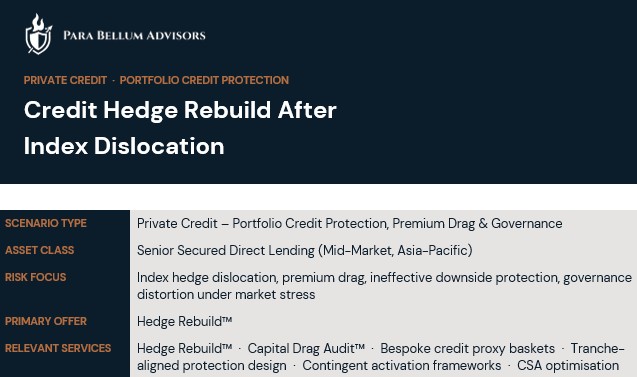
Sector: Private Credit – Direct Lending / Senior Secured Loans
Asset Class: Senior Secured Direct Lending (Mid-Market, Asia-Pacific)
Situation Type: Portfolio-level credit protection using public indices (CDX/iTraxx proxies)
Primary Issue: Premium drag and weak downside relevance driven by index–portfolio mismatch, not asset stress
The Situation
Private credit portfolios often retain index-based credit hedges long after their risk profile has become specialised, asset-backed, and recovery-driven.
The hedge still exists – but it no longer responds to the forces that actually generate losses
Why This Scenario is Common
CDS Index hedges are easy to implement, familiar to boards, and rarely questioned during benign periods. As portfolios mature and specialise, protection logic often fails to keep pace with underwriting reality.
Effectiveness is assumed – not tested.
Why It Matters
Premiums are paid for protection that increasingly behaves like a macro overlay. Hedge P&L distorts governance discussions while offering limited relevance to downside risk.
The cost is not blow-ups – it’s persistent capital drag and decision noise.
How This Is Typically Addressed
By rebuilding portfolio credit protection around actual loss drivers, recovery profiles, and governance needs – not public index convenience.
Primary Engagement Route
Hedge Rebuild™ – Proxy basket construction, tranche calibration, contingent activation, collateral and governance frameworks
Full structural narrative shared selectively on request.
Illustrative scenario for discussion purposes only. Not a transaction summary or client-specific case study.